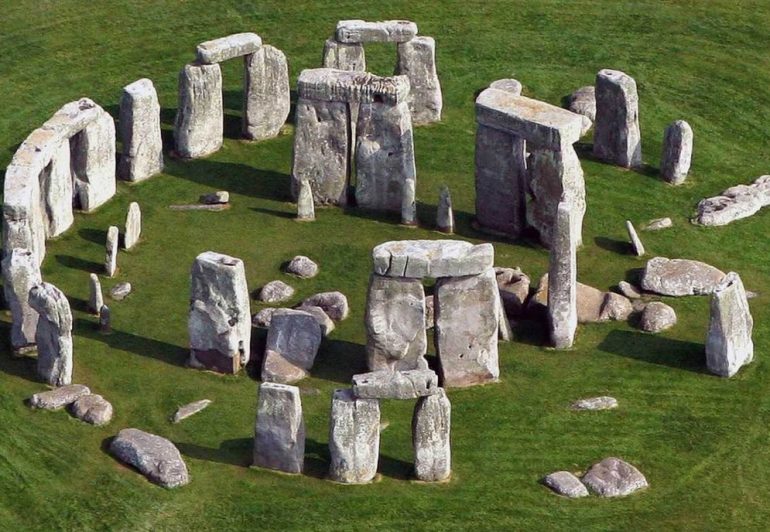
Stonehenge from London: Coach, Small Group or Private — What Each One Actually Gets You
Stonehenge sits about two hours west of London, in the middle of Salisbury Plain, and roughly a million and a half people a year make the trip. Almost all of them do it the same way: a coach leaves Victoria at eight, arrives with forty other coaches, gives everyone ninety minutes, and returns in rush-hour traffic. It works. It is also the least interesting version of a genuinely extraordinary day.
This article covers what the trip actually involves, what the three formats cost, and how to decide which one fits — including the question most people never think to ask, which is what else you put in the day.
What you are actually going to see
The stones went up in stages between roughly 3000 and 1500 BC. The big sarsens came from about 25 km away and weigh up to 25 tonnes; the smaller bluestones came from the Preseli hills in Wales, some 250 km away, which is the part nobody has fully explained. The monument is aligned on the midsummer sunrise and the midwinter sunset, and the surrounding landscape is thick with burial mounds that most visitors walk past without noticing.
What you do not do, on a standard visit, is touch the stones. The path runs around the circle at a respectful distance, and entry is by timed ticket through English Heritage, at roughly £30 per adult. There is a separate, limited and considerably more expensive arrangement for access inside the circle outside opening hours, and it sells out months ahead.
The detail that decides your day: tickets are timed, and the middle of the day in summer is when every coach in southern England arrives at once. A visit at opening or late in the afternoon is a different monument in a different light, with a fraction of the people. That timing is the single biggest thing a private tour buys you.
The three formats
The coach tour
Cheapest by a distance — often under £60 a head including entry — and completely fine if the stones are the only thing you want. You travel with forty to fifty people, the schedule is fixed, and the stop is usually around ninety minutes, sometimes with Windsor or Bath bolted on and rushed. Departure is early, return is late, and a large part of the day is spent waiting for the group to reassemble.
The small-group tour
Typically eight to sixteen people in a minibus, from around £100–£150 per person. More civilised than the coach, more flexible with timings, and often better guided. You are still working around other people’s schedules and other people’s questions, and “small group” is not the same as private however the listing is worded.
The private tour
Your group, your guide, your departure time. Prices split sharply depending on what you are buying: a per-person private excursion with an official guide and vehicle, or a chauffeur-driven day with a Blue Badge guide and tickets included. A six-hour private excursion to Stonehenge from London starts at 239 € per person, with the rate falling as the group grows. At the premium end, London specialists quote from around £1,210 per group for the same day with a Blue Badge guide, chauffeur and entries arranged.
What it costs, honestly
| Format | Typical price | Group | Time at the stones |
|---|---|---|---|
| Coach | From about £50–£60 pp | 40–50 people | About 90 minutes, fixed |
| Small group | About £100–£150 pp | 8–16 people | Around 2 hours |
| Private, per person | From about 239 € pp | Your party only | As long as you want |
| Private, chauffeur-driven | From about £1,210 per group | Your party only | As long as you want, entries included |
Entry is roughly £30 per adult on top, unless the listing says otherwise. Check that line specifically: it is the most common omission in the cheaper private listings.
What else to put in the day
Stonehenge itself needs about two hours, including the shuttle from the visitor centre and the exhibition. The drive is two hours each way. That leaves a gap in the middle of the day, and what you do with it is what separates a good trip from a long one.
Salisbury
Bath
Windsor
Avebury
The Cotswolds
Typical private combinations run from around 389 € per person for Stonehenge with Bath, Oxford or Avebury, to about 420 € per person for Stonehenge with Windsor, or Stonehenge, Salisbury and Windsor together.
Six questions before you book
- Is the entry ticket included, or extra? Roughly £30 a head either way, but you should know which.
- What time will we arrive at the stones? The honest answer is the whole point. Midday in August is the worst slot of the day.
- Is the guide qualified, and do they come inside? Some cheaper “private” trips are a driver with a car and no guiding at all.
- Is the price per person or per group? With four or more travellers this changes everything.
- How long is the day, door to door? Six hours for Stonehenge alone; ten to twelve with Bath.
- What happens if it rains? Salisbury Plain has no shelter. A good operator will tell you to bring a coat rather than pretend the weather is optional.
Frequently asked questions
Can you touch the stones?
Is Stonehenge worth it, or is it overrated?
How long does the trip take from London?
What is the best time of year?
Can I do it by train instead?
How the visit actually works on the ground
You arrive at a visitor centre roughly two kilometres from the stones, not at the monument itself. There is an exhibition with finds from the surrounding landscape and a reconstruction of the Neolithic houses, and then a shuttle bus runs you up to the circle — or you can walk it across the fields in about half an hour, which is far better if the weather allows and nobody in the group minds.
The path loops around the stones and the whole circuit takes twenty minutes at a normal pace, longer if someone is explaining what you are looking at. Budget two hours for the site as a whole: exhibition, shuttle, circle and the walk back. Anyone who tells you ninety minutes is comfortable has not included the shuttle queue in August.
What to bring
- A windproof coat, whatever the forecast says. Salisbury Plain is open in every direction and there is no shelter at the stones.
- Shoes you can walk on grass in. The path is surfaced, the shortcut across the fields is not.
- Sunglasses in summer and gloves in winter. The light on the plain is flat and bright, and the wind in January is genuinely cold.
- Your ticket confirmation. Entry is timed, and the slot is checked.
Solstice, sunrise and access inside the circle
Twice a year, at the summer and winter solstices, the site opens for free access to the stones themselves and several thousand people turn up to watch the sun line up with the Heel Stone. It is memorable and it is nothing like a quiet visit: expect crowds, traffic and a very early start.
The rest of the year there is a separate arrangement for small numbers to go inside the circle before opening or after closing, booked months ahead and priced well above a standard entry. If walking among the stones matters to you more than the itinerary around them, this is the option to ask about first — and the one that has to be planned around, not added at the end.
The bottom line
If the stones are a box to tick, the coach does the job for a fraction of the money and nobody should pretend otherwise. If you want to arrive when the light is good, stay as long as you like, stop in Salisbury or Avebury on the way and travel with someone who can explain what four thousand years of building actually produced, the private format is the only one that delivers it.
Decide the group size first, because it changes which pricing model wins, then ask about the arrival time before anything else. From there, whether you book the stones alone or combine them with Bath or Windsor as part of a wider set of private excursions from London, the day organises itself around the one thing that matters: being there when almost nobody else is.
