The departures board at the airport is the last place to learn that your flight is delayed. By the time it changes, you have already parked, queued and committed to the terminal. The information was available two hours earlier — in most cases it was in the air, somewhere else, on its way to you.
Your plane is usually someone else’s plane first
Aircraft fly chains. The machine operating your 18:40 departure probably flew three other sectors that day, and it arrives from somewhere before it can leave with you. If that inbound leg is running ninety minutes late, your departure is late too, regardless of what the board says.
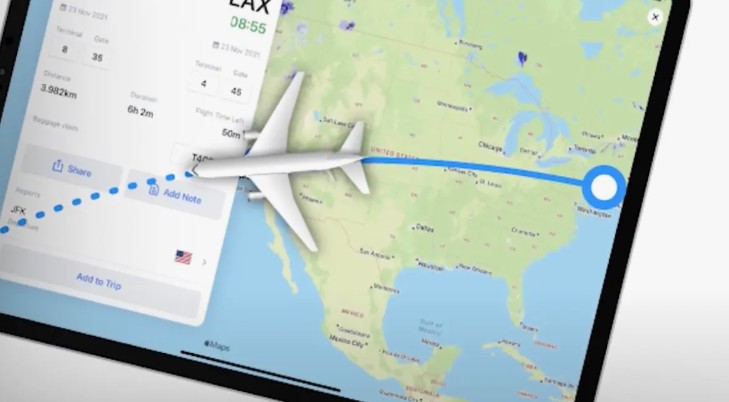
Airlines do not publish this connection prominently, but a live flight tracker shows it directly: you can see whether the aircraft assigned to your flight is on the ground at your airport, still in the air, or has not departed its origin yet. An aircraft still sitting at an airport four hours away at 16:00 is not leaving with you at 18:40.
What to check, and when
| When | Check | What it tells you |
|---|---|---|
| Night before | Yesterday’s operation of the same flight number | Whether this route is chronically late |
| 4 hours out | Where the inbound aircraft is | The best early delay signal available |
| 2 hours out | Aircraft position and status | Whether to leave home yet |
| At the gate | Actual pushback and taxi | Connection risk downstream |
Set an alert instead of refreshing
Checking manually is fine once. Doing it every twenty minutes for a day is how people end up anxious and no better informed. Setting up flight alerts means a notification arrives when the status actually changes — a schedule change, a gate change, an inbound delay — rather than when you happen to look.
This matters most for early-morning departures, where a delay posted at 04:00 is worth an extra hour of sleep, and for connections, where twenty minutes of warning determines whether you sprint or rebook.
Reading the status honestly
A few conventions that mislead people:
- “On time” means scheduled, not confirmed. Until the inbound aircraft has landed, “on time” is an intention.
- Departure time is pushback, not wheels-up. A flight can push back on schedule and sit on a taxiway for forty minutes. It counts as on time.
- Arrival time is gate arrival. Landing early and waiting for a stand is common at congested hubs.
- Cancellations propagate. If the inbound is cancelled, yours is at risk even while it still shows as scheduled.
When the tracking goes quiet
Aircraft sometimes vanish from a tracking map mid-flight. This is almost never a problem — it usually means the flight has crossed an ocean or an area with no ground receiver coverage, and the position resumes when it is back in range. Coverage over land is dense; over open water it depends on satellite reception.
A practical routine
- The night before, look at how the same flight number performed for the last few days.
- Set an alert so you are told about changes rather than hunting for them.
- Four hours before, find the inbound aircraft. This is the single most useful check.
- Decide your departure time from home based on the inbound, not on the schedule.
- Keep watching after check-in — gate changes happen late and are announced quietly.
If you have not done this before, the mechanics are straightforward and covered step by step in this guide on how to track a flight. None of it changes whether the flight is late. It changes whether you spend the delay in an airport queue or at home with a coffee, which over a year of travel is a meaningful difference.
