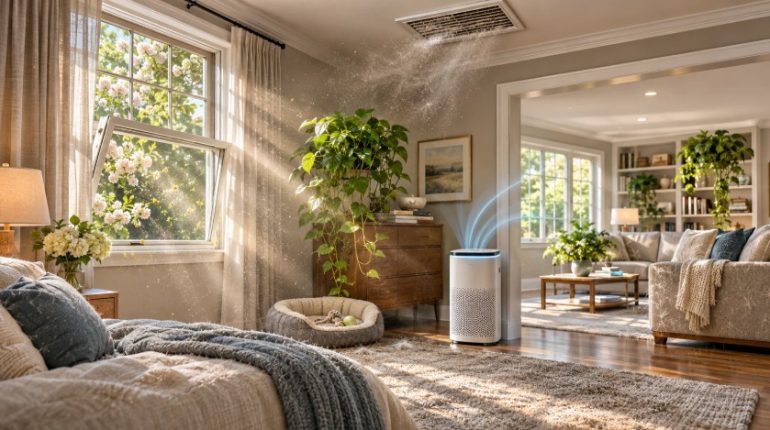
Many people assume their home is a refuge from allergens, yet they notice they sneeze, cough or wake up congested more often indoors than out. According to an environmental inspector at https://safesiteenv.com, this is one of the most common reasons people start asking questions about their indoor air. The answer is usually not one single cause, but a combination of particles, moisture and ventilation inside the house.
Indoor Air Isn’t Automatically Cleaner
The U.S. Environmental Protection Agency notes that levels of some pollutants indoors can be several times higher than outdoors. Modern homes are built to be energy efficient, which means they hold air in. That’s good for utility bills, but it also traps everything released inside: dust, moisture from cooking and showers, fumes from cleaning products and spores from hidden damp areas. Most of us spend the majority of our time indoors, so even moderate levels add up.
Common Indoor Triggers
Inspectors see the same culprits in home after home:
- Dust mites living in mattresses, pillows, carpets and upholstered furniture.
- Mold spores from leaks, bathrooms without proper exhaust, or damp areas behind walls and under sinks.
- Pet dander that settles into fabrics and circulates every time the HVAC runs.
- Volatile organic compounds (VOCs) from paint, new furniture, air fresheners and cleaning sprays.
- Combustion particles from gas stoves, fireplaces and candles.
- Excess humidity that feeds both dust mites and mold.
Signs the Problem Is the House
A few patterns suggest your home, rather than seasonal pollen, is behind the symptoms. Do you feel better after a few days away and worse once you return? Are symptoms stronger in one particular room, such as a bedroom or basement? Do they flare up when the heating or air conditioning switches on? Other clues include a musty odor, condensation on windows, peeling paint or discoloration on ceilings and walls.
Simple Steps You Can Take Today
Start with ventilation. Run bathroom and kitchen exhaust fans during and after showers and cooking, and open windows when outdoor air quality allows. Keep indoor humidity roughly between 30 and 50 percent; an inexpensive hygrometer will tell you where you stand. Vacuum with a HEPA-filter vacuum, wash bedding in hot water every week, and replace HVAC filters on schedule. Fix any leak promptly, even a small one under a sink, because damp materials can support mold growth within a day or two.
When Testing Makes Sense
If symptoms continue despite these steps, talk to a doctor first; an allergist can identify what you react to. Professional indoor air quality testing can then show what’s actually in your home’s air. A typical assessment measures particulates, humidity and VOCs, and compares mold spore counts indoors with an outdoor sample to see whether something inside is amplifying them. Testing doesn’t replace a medical diagnosis, but it gives you and your doctor real data instead of guesswork, and points to the source that needs fixing.
