Introduction: The Hidden Cost of a Missing Tooth
When a patient loses a tooth, the immediate concern is often aesthetic. Yet beneath the surface, a cascade of biological changes begins—alveolar bone resorption, shifting of adjacent teeth, and altered occlusal forces that can compromise the entire stomatognathic system over time. For patients across the UK, the decision between a dental implant and a conventional bridge represents one of the most significant restorative choices they will face.
This guide draws upon current clinical evidence, NICE-aligned protocols, and the restorative expertise of specialist dental teams to provide an objective, patient-centred comparison. Whether you are researching options for yourself, advising a family member, or seeking expert clinical verification for a health publication, the following analysis offers a transparent framework for understanding the mechanics, longevity, and biological implications of each approach.
Understanding the Fundamentals: How Each Restoration Works
Dental Implants: Osseointegration and Biomimetic Function
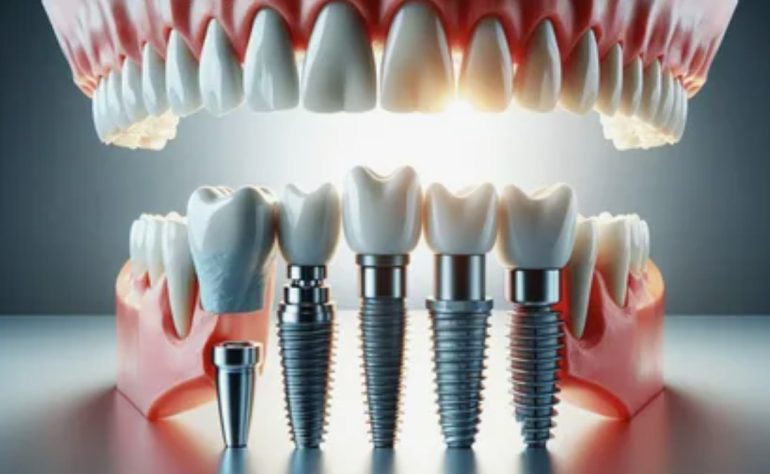
A dental implant is a titanium or zirconia fixture surgically placed into the alveolar bone, where it undergoes osseointegration—the direct structural and functional connection between living bone and the surface of a load-bearing implant. This process, first described by Brånemark, typically requires 3–6 months for full integration before definitive prosthetic loading.
Key biological advantages:
- Enamel preservation: Adjacent teeth remain completely untouched; no preparation or reduction of healthy tooth structure is required.
- Alveolar bone maintenance: The implant transmits masticatory forces to the bone, stimulating the periodontal ligament analogue and reducing resorption.
- Independent support: The restoration is self-supporting, eliminating additional load on neighbouring teeth.
Dental Bridges: Conventional Fixed Prosthodontics
A conventional bridge replaces a missing tooth by splinting an artificial pontic to crowns placed on adjacent abutment teeth. This approach relies on the mechanical integrity of the supporting teeth and requires significant reduction of enamel and dentine to accommodate the retainer crowns.
Critical clinical considerations:
- Tooth structure sacrifice: Abutment teeth must be prepared circumferentially, often removing 1.5–2.0mm of axial tooth structure.
- Biological width compromise: Subgingival margins can impinge on the gingival margins and periodontal attachment apparatus if not precisely placed.
- Caries risk: The cement layer and margin interface present long-term susceptibility to recurrent decay.
Comparative Analysis: A Structured Clinical Overview
| Clinical Parameter | Dental Implant | Conventional Bridge |
|---|---|---|
| Treatment timeline | 3–9 months (including healing) | 2–4 weeks from preparation to cementation |
| Adjacent tooth impact | None—fully independent | Requires preparation of 1–2 abutment teeth |
| Bone preservation | Maintains alveolar volume through functional loading | No bone stimulus beneath pontic; potential resorption |
| Longevity (evidence-based) | 10-year survival rates of 95–98% | 10-year survival rates of 80–85%; abutment tooth failure is primary mode |
| Aesthetic predictability | Excellent; emergence profile can be sculpted via custom abutments | Dependent on abutment tooth colour and gingival symmetry |
| Reversibility | Irreversible (surgical component) | Irreversible (tooth structure removed) |
| Cost (UK private sector) | £2,000–£3,500 per implant (including restoration) | £1,500–£3,000 for a three-unit bridge |
| Suitability | Adequate bone volume; controlled periodontal health | Strong adjacent teeth with sufficient coronal structure; patient preference for speed |
Long-Term Oral Health Impact: What the Evidence Shows
The Problem of Alveolar Resorption
Following tooth extraction, the alveolar ridge undergoes both horizontal and vertical resorption. Studies indicate that within the first year post-extraction, ridge width can decrease by 25%, with continued slow resorption thereafter. Dental implants arrest this process by providing functional stimulation to the bone. In contrast, the pontic of a bridge sits above the ridge, offering no osteogenic stimulus and often leading to a visible “gap” beneath the artificial tooth over time.
Periodontal Health and Maintenance
Implants require meticulous oral hygiene to prevent peri-implant mucositis and peri-implantitis—conditions analogous to gingivitis and periodontitis. However, because they do not connect to adjacent teeth, implants eliminate the risk of “domino failure” seen when an abutment tooth supporting a bridge develops caries or endodontic pathology.
The restorative team at York House Dental Practice emphasises that bridge maintenance demands equally rigorous interdental cleaning beneath the pontic using superfloss or interdental brushes, as plaque accumulation at the gingival margin interface is a leading cause of abutment tooth failure.
The Economics of Longevity
While bridges present a lower initial financial outlay, their lifetime cost can exceed that of implants when accounting for:
- Replacement due to abutment tooth failure (average bridge lifespan: 10–15 years)
- Endodontic treatment of compromised abutments
- Replacement restorations necessitated by recurrent caries or cement washout
Implants, with documented 20-year survival rates exceeding 90% in controlled studies, often represent the more cost-effective intervention when evaluated over a 15–20-year horizon.
Clinical Decision-Making: Patient-Specific Factors
When Implants Are the Preferred Option
- Younger patients: Longer life expectancy increases the cumulative benefit of bone preservation and tooth conservation.
- Multiple missing teeth: Implant-supported bridges or overdentures avoid the need for extensive preparation of multiple abutment teeth.
- Posterior edentulous spans: Where occlusal forces are highest, implants distribute load independently without compromising adjacent teeth.
- High caries risk: Patients with a history of recurrent decay are poor candidates for bridge abutments.
When Bridges Remain Clinically Justified
- Insufficient bone volume without willingness to undergo bone grafting or sinus augmentation.
- Medical contraindications to minor oral surgery (e.g., uncontrolled diabetes, bisphosphonate therapy, recent radiotherapy).
- Limited treatment time due to aesthetic or functional urgency.
- Financial constraints requiring immediate, lower-capital restoration.
Key Takeaways for Patients and Referring Clinicians
- Enamel preservation is a paramount principle in modern restorative dentistry; implants uniquely satisfy this by leaving adjacent teeth completely intact.
- Osseointegration provides not merely a mechanical anchor but a biological safeguard against alveolar bone resorption.
- Conventional bridges remain a valid prosthodontic solution but introduce irreversible compromise to abutment teeth and carry a measurable long-term failure risk.
- Orthodontic relapse and occlusal changes following tooth loss can be mitigated by timely restoration—delays of even 6–12 months significantly complicate subsequent treatment.
- The choice between implant and bridge should be guided by a comprehensive clinical assessment including bone volume, periodontal status, caries risk, and patient expectations—not by cost alone.
Expert Clinical Perspective
“In our practice, we observe that patients who receive timely implant-based restorations demonstrate superior long-term periodontal stability and report higher functional satisfaction scores at five-year review. The key is early intervention—once significant alveolar resorption has occurred, the reconstructive pathway becomes more complex and less predictable. Our protocol involves cone-beam CT assessment, digital smile design, and collaborative planning between our surgical and prosthodontic clinicians to ensure outcomes that are both biologically sound and aesthetically refined.”
— The clinical director at York House Dental Practice
This integrated approach—combining three-dimensional radiographic evaluation, digital treatment planning, and interdisciplinary coordination—reflects the standard of care advocated by the Faculty of General Dental Practice (UK) and the Association of Dental Implantology.
Conclusion: Prioritising Biological Integrity in Restorative Planning
The decision between a dental implant and a conventional bridge extends far beyond the dental chair. It influences masticatory function, facial aesthetics, alveolar architecture, and the long-term prognosis of the entire dentition. For patients seeking a restoration that preserves natural tooth structure, maintains bone volume, and offers the highest documented survival rates, implant-based rehabilitation represents the evidence-based gold standard.
For those where surgical intervention is contraindicated or impractical, the conventional bridge—when executed with precision margin placement, biocompatible materials, and rigorous maintenance protocols—remains a viable and time-honoured solution.
Ultimately, successful restorative dentistry is not merely about filling a gap. It is about restoring biological harmony, functional equilibrium, and patient confidence for decades to come. Any treatment plan should be grounded in a thorough diagnostic workup, transparent risk communication, and a commitment to enamel preservation and periodontal health as non-negotiable clinical priorities.
This article is intended for informational and educational purposes. Individual treatment recommendations require a comprehensive clinical examination by a GDC-registered dental professional.
