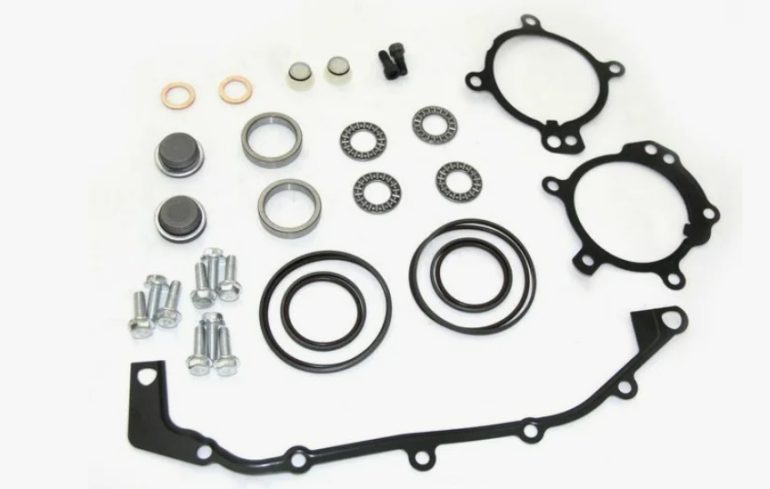
Seven signs your BMW needs Vanos repair kits
If a BMW starts to lose its smooth character, the symptoms rarely appear out of nowhere, they grow step by step and often seem harmless at first. Many drivers blame bad fuel, winter tires or city traffic, while the root cause hides much deeper in the valve timing system. To understand when it is time to act, it helps to look at how different symptoms are connected with wear in one unit. When the pattern becomes clear, it is easier to react early and protect the engine from costly repairs. In this context, specialized Vanos BMW repair kits from suppliers such as https://klifex.com/ give owners a practical way to restore the system without replacing the whole unit.
Rough idle that does not go away
One of the most typical early signs is a rough idle that appears on warm or cold engine and does not disappear after usual maintenance. The tachometer may show only small fluctuations, yet the driver feels vibration in the steering wheel, seats or floor, and the exhaust note becomes uneven. When valve timing can no longer adapt correctly, cylinders receive air and fuel at the wrong moment, so the engine struggles to keep a stable rhythm. If cleaning injectors and replacing spark plugs does not change the situation, attention should turn to the timing control system.
- Noticeable vibration in the cabin while waiting at traffic lights.
- Short hiccups in idle speed without any climate control load.
- Exhaust sound changes from smooth to choppy or pulsating.
Loss of low‑end torque under normal driving
Another signal that something is wrong appears during everyday acceleration from a stop or at low speeds. Instead of a confident and elastic push, the car feels heavy, responds with a delay and only wakes up at higher revs. This behavior points to a situation where camshaft phases no longer match load and rpm, so the engine cannot build torque in the range where it spends most of its time. Vanos BMW repair kits are designed to restore this adaptive control and return the feeling of reserve on tap in city traffic.
Drivers often adapt unconsciously, pressing the accelerator deeper and keeping revs higher to compensate. Fuel consumption then grows, while the engine and transmission work harder than they should in typical city use. Over time, this habit turns into extra stress for many components, from clutch or torque converter to engine mounts and cooling system.
Rattling noises around the front of the engine
Metallic rattling or ticking from the front of the engine, especially on cold start, is a classic symptom that the mechanism with bearings and guides is no longer working as intended. At first the sound appears only for a few seconds after start and then disappears as oil pressure builds up. Later, the noise becomes longer and may return at warm idle or during gentle acceleration. Anti‑rattle elements inside the unit gradually lose their ability to keep parts tight, so clearances grow and moving pieces start to hit each other.
Quality Vanos BMW repair kits usually include upgraded anti‑rattle components and seals that remove this slack and stabilize the mechanism. When the noise is ignored for a long period, vibration and shock loads can spread to timing chain, sprockets and guides. In the worst case this chain reaction leads to skipped timing, misfires and mechanical damage that costs far more than a preventive rebuild.
Unstable acceleration and flat spots
Some owners notice that the car accelerates in waves: at first it hesitates, then suddenly pulls harder and then loses eagerness again. These flat spots often appear around three thousand rpm where the system usually adjusts camshaft position to match medium load. When the control mechanism responds slowly or moves the cam to the wrong angle, the engine cannot deliver a clean, predictable torque curve. The result is inconsistent performance that makes overtaking and merging feel less comfortable.
This symptom often comes together with occasional misfires under load that are visible in diagnostic reports. Coils and plugs are not always to blame; incorrect valve timing can disturb cylinder filling so much that the mixture burns poorly. When a mechanic sees such a combination of codes, inspection of the timing control hardware should stand next to ignition and fuel system checks.
Growing fuel consumption without visible reason
Fuel consumption in real life depends on traffic conditions, driving style and weather, so many drivers do not notice a slow increase across several months. Still, if the same routes and habits suddenly require more fuel, one should think about efficiency of the valve timing system. When the mechanism cannot adapt to load and speed, the engine often runs with less than ideal mixture filling and timing, so the control unit compensates by adding more fuel. Vanos BMW repair kits help restore the ability to keep combustion closer to optimal over a wide rpm range.
- More frequent visits to the gas station on usual daily routes.
- Onboard computer shows higher average consumption in mixed driving.
- No visible fuel leaks or strong fuel smell under the car.
Check engine light with typical fault codes
As wear progresses, the engine control unit starts to log fault codes for timing correlation, actuator position or adaptation limits. The check engine light may first appear only from time to time and then stay on permanently. Many drivers continue to use the car because it still moves and sounds tolerable, yet stored codes show that the control system has already reached its correction limits. When this threshold is crossed, the control unit can switch to a safe mode with reduced power to protect the engine and catalytic converters.
Diagnostic tools often show codes related to correlation between crankshaft and camshaft sensors, slow response of the actuator or incorrect position at specific rpm. In such cases, replacing only the solenoid may not solve the root cause if mechanical parts inside the unit are worn out. A complete rebuild with proper Vanos BMW repair kits brings back the original mechanical precision that electronic control alone cannot compensate.
Slow cold starts and occasional stalling
How starting behavior changes
Cold mornings reveal weaknesses in many mechanical systems, and variable valve timing is no exception. A car that once started immediately now needs a longer crank, may shake during the first seconds and sometimes even stalls when the driver selects gear or turns the steering wheel. When valve timing does not move to the required position for stable cold combustion, the engine struggles to build a clean idle and smooth torque from the first moments after start. Drivers sometimes blame the battery or starter, yet the underlying problem lies deeper in timing control.
Why early intervention helps the engine
Every one of these signs alone does not prove that variable valve timing is the only faulty component, but a combination of several symptoms should push the owner to schedule diagnostics. When rough idle, loss of low‑end torque, rattling and higher fuel consumption appear together, the probability of worn timing control hardware grows significantly. At this stage Vanos BMW repair kits allow a technician to rebuild the unit, renew seals and anti‑rattle parts and restore precise movement of the mechanism. Timely repair helps protect pistons, valves, chain drive and exhaust system from increased stress and keeps the car enjoyable to drive for many more kilometers.
