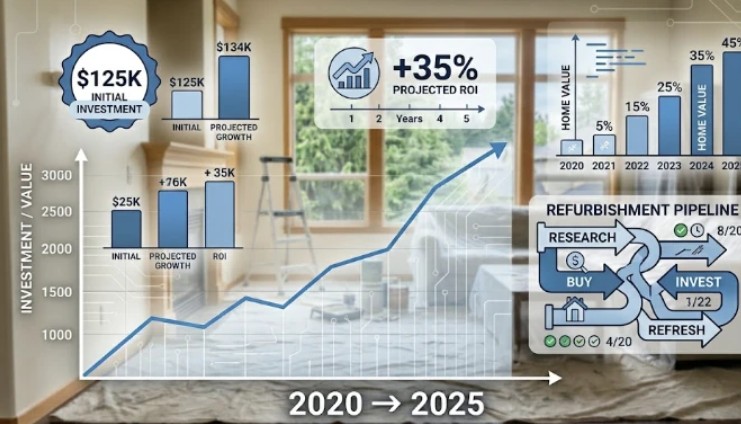
The home services industry is experiencing one of its strongest growth periods in decades. Driven by shifting consumer priorities, post-pandemic home investment, and the growing normalization of outsourcing domestic tasks to specialists, Americans are spending more on professional home maintenance than ever before — and the professional upholstery cleaning segment is among the fastest-growing categories within that broader trend.
Understanding what’s driving this growth offers insight not just into a market shift, but into how homeowner behavior and expectations are fundamentally changing across the United States.
The Numbers Behind the Trend
The U.S. home services market was valued at over $600 billion in recent years and continues to expand at a compound annual growth rate that consistently outpaces broader consumer spending. Within this market, residential cleaning services — including specialized upholstery and furniture cleaning — represent one of the highest-growth subcategories, fueled by demographic shifts, urbanization, and a fundamental change in how people relate to their living spaces.
Consumer surveys consistently show that homeowners today are more willing to spend on professional maintenance services than previous generations were. The calculation has shifted: where earlier generations viewed professional cleaning as a luxury reserved for special occasions, a growing segment of the market now treats it as routine maintenance — budgeted, scheduled, and expected.
Five Forces Driving the Upholstery Cleaning Boom
1. The Post-Pandemic Home Investment Wave
The extended period of remote work and home-centered living that began in 2020 triggered an unprecedented wave of home investment across the United States. With more time spent at home than ever before, consumers developed a sharper awareness of their living environments — noticing wear, soiling, and maintenance needs they had previously overlooked in the rush of daily commuting life.
This heightened attention to home quality translated directly into demand for professional services. Upholstery cleaning saw a sustained demand increase as homeowners who had been spending forty or more hours per week on their sofas started to genuinely notice what those sofas looked like — and began acting on it. That behavioral shift has largely persisted even as work patterns have normalized.
2. Health and Wellness Priorities
One of the most significant consumer trends of the past five years has been the mainstreaming of indoor air quality and home wellness as genuine priorities rather than niche concerns. Research on dust mites, VOCs, allergens, and indoor pollutants has reached a broad consumer audience, and the role of upholstered furniture as one of the primary reservoirs for these contaminants has become more widely understood.
Professional upholstery cleaning removes allergens, bacteria, and particulate matter from fabric fibers at a depth that no household vacuum can reach. For households with allergy sufferers, asthma patients, young children, or simply health-conscious residents, this functional benefit — rather than purely aesthetic improvement — is now a primary purchase driver. The positioning of upholstery cleaning as a health investment rather than a cosmetic service has significantly expanded its market.
3. The Airbnb and Short-Term Rental Effect
The explosive growth of the short-term rental market has created an entirely new category of demand for professional upholstery cleaning. Airbnb hosts and property managers operating vacation rentals face an ongoing challenge that traditional homeowners don’t: high-frequency guest turnover means upholstered furniture accumulates soil, stains, and odors at a rate that no standard cleaning routine can keep pace with.
Professional upholstery cleaning has become a standard operational expense for well-run short-term rental properties, in the same category as professional photography and smart lock installation. In markets with high short-term rental density — including Seattle and its surrounding communities — this has created a material increase in professional cleaning demand that runs parallel to and independently of the residential homeowner market.
4. Rising Furniture Quality and Investment Value
Average furniture spending per household has increased significantly over the past decade, driven partly by the direct-to-consumer furniture market and partly by a broader cultural shift toward fewer, higher-quality purchases. When a household sofa represents a $1,500 to $3,000 investment rather than a $400 one, the economics of professional maintenance change fundamentally.
At the lower price point, replacement is often cheaper than professional care. At the higher price point, annual professional cleaning at $100 to $200 — which extends the lifespan of the piece by years and maintains its appearance and resale value — becomes an obvious financial decision. The premiumization of the furniture market has directly expanded the addressable market for professional upholstery cleaning services.
5. Local Service Discovery and the Digital Booking Effect
The friction involved in finding and booking a local service professional has dropped dramatically over the past several years. Search engines now surface highly specific local service providers — homeowners searching for professional upholstery cleaners in their specific city or neighborhood find vetted local options within seconds rather than having to rely on word of mouth or printed directories.
This reduction in discovery friction has unlocked latent demand that existed but previously went unacted upon. Homeowners who thought about having their furniture professionally cleaned but never got around to finding someone now complete that search and booking in minutes. For local service businesses — including established providers offering professional upholstery cleaners in Bothell and across the Seattle metro area — this digital accessibility has been a significant growth driver, bringing in customers who previously had no easy path to the service.

What This Means for the Pacific Northwest Market
The Seattle metropolitan area represents a particularly strong market for professional home services in general and upholstery cleaning specifically. Several regional factors amplify the national trends described above:
Climate conditions. The Pacific Northwest’s characteristic moisture and rainfall creates specific upholstery maintenance challenges — mold and mildew risk, tracking of outdoor soil and debris, and the general dampness that makes deep fabric cleaning more periodically necessary than in drier climates. Professional services that understand these regional conditions command strong demand.
High household incomes. The Seattle metro area’s concentration of technology industry employment produces household income levels significantly above national averages, supporting higher per-capita spending on professional home services across the board.
Strong environmental values. Pacific Northwest consumers consistently demonstrate above-average preference for eco-friendly service providers — those using biodegradable, low-toxicity cleaning products. Local providers that can credibly position their services as environmentally responsible have a meaningful competitive advantage in this market.
Short-term rental density. King and Snohomish counties have significant short-term rental markets, adding the commercial demand layer discussed above to an already strong residential base.
The Outlook
Industry analysts project continued growth in the professional home services sector through the remainder of this decade. The combination of demographic factors — aging homeowner population, increasing dual-income households with less time for domestic maintenance, continued premiumization of home furnishings — and the structural tailwinds of digital service discovery and health-driven consumer priorities creates a sustained demand environment.
For consumers, the practical implication is straightforward: professional upholstery cleaning is increasingly accessible, increasingly affordable relative to furniture replacement costs, and increasingly understood as routine maintenance rather than occasional luxury. The trend data suggests that homeowners who haven’t yet incorporated professional furniture cleaning into their regular maintenance schedule are increasingly in the minority.
