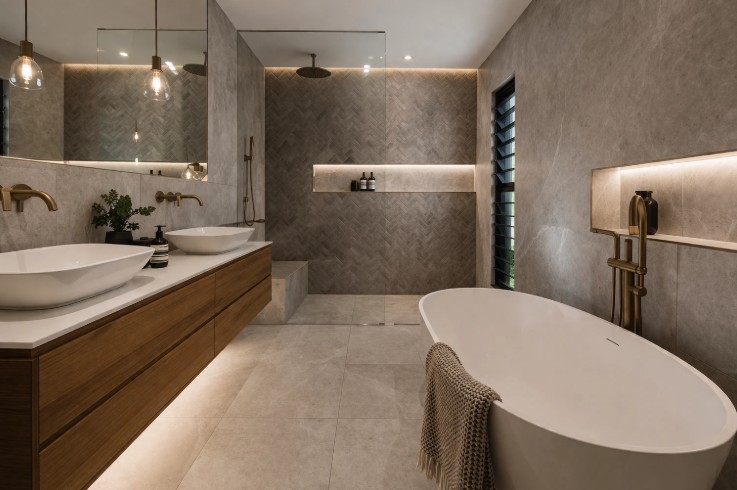
Choosing the right materials for a bathroom remodel is one of the most important decisions homeowners make. The bathroom is a high-moisture environment, exposed to constant temperature changes and daily wear. At Luxx Remodel, we emphasize durability, functionality, and timeless design when selecting materials that will perform well for years while maintaining a clean, modern look.
Why Material Selection Matters?
Bathroom materials are not just about aesthetics. Poor choices can lead to mold, water damage, and costly repairs. High-quality materials, on the other hand, improve longevity, simplify maintenance, and increase property value. A well-planned selection ensures that every element—from flooring to fixtures—works together both visually and practically.
Best Flooring Materials for Bathrooms
Flooring must be water-resistant, slip-resistant, and durable. Porcelain and ceramic tiles remain the top choices due to their strength and versatility. They are available in a wide range of styles, including designs that mimic natural stone or wood.
Natural stone, such as marble or slate, offers a premium appearance but requires sealing and more maintenance. Luxury vinyl flooring is another popular option, especially for budget-conscious homeowners, as it provides water resistance and comfort underfoot.
Wall Materials and Finishes
Walls in a bathroom must handle humidity and frequent cleaning. Tiles are the most reliable solution, especially for shower areas. Large-format tiles are increasingly popular because they reduce grout lines and create a sleek, modern look.
Paint is still used in non-wet areas, but it must be moisture-resistant and specifically designed for bathrooms. Acrylic panels and waterproof wall systems are also gaining traction due to their easy installation and low maintenance.
Countertops and Vanities
Countertops should be both durable and resistant to moisture. Quartz is one of the best options because it is non-porous, easy to maintain, and available in many finishes. Granite is another strong choice, though it requires periodic sealing.
Vanities should be made from moisture-resistant materials such as treated wood or MDF with protective coatings. Proper sealing and ventilation around vanity units are critical to prevent long-term damage.
Fixtures and Hardware
Fixtures play both a functional and aesthetic role. High-quality metals such as stainless steel, brass, and chrome are recommended for faucets, showerheads, and handles. These materials resist corrosion and maintain their appearance over time.
When selecting fixtures, it is also important to consider water efficiency and modern features. Many homeowners now opt for eco-friendly solutions that reduce water consumption without sacrificing performance.
Key Factors to Consider
When choosing bathroom materials, it is essential to evaluate several factors that impact long-term results:
- Moisture resistance and durability
- Ease of cleaning and maintenance
- Slip resistance for safety
- Compatibility with the overall design
- Budget and long-term value
Balancing these factors helps ensure that the remodel meets both practical and aesthetic expectations.
Creating a Cohesive Design
Material selection should not be done in isolation. Flooring, walls, countertops, and fixtures must work together to create a cohesive and visually appealing space. Neutral tones combined with textured surfaces are currently a popular trend, offering both elegance and flexibility for future updates.
At Luxx Remodel, we guide homeowners through every step of the selection process, ensuring that each material aligns with the project goals and lifestyle needs. The right combination of materials can transform a bathroom into a comfortable, durable, and visually striking space that adds lasting value to the home.
