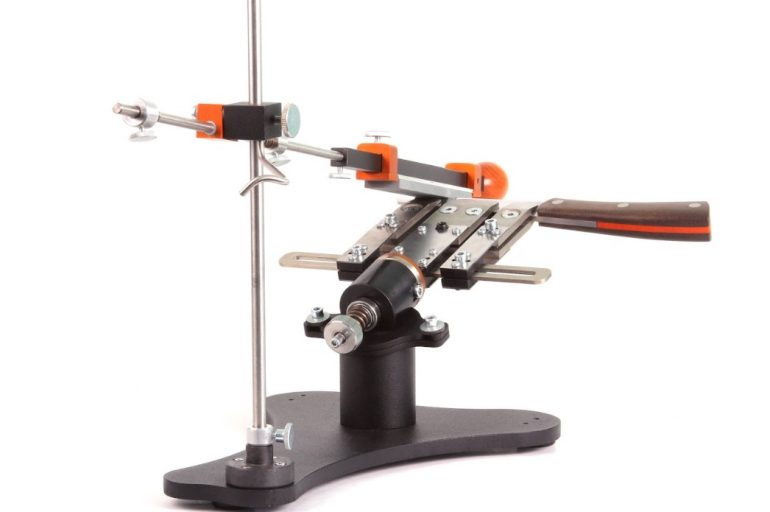
On a quiet evening in the kitchen, the first pass of the stone along the blade can feel almost ceremonial, especially when your routine starts with professional knife sharpeners built for precise work. The Hapstone R2 turns this moment into a repeatable process instead of a lucky accident. With its stable base and controlled angles, every stroke becomes deliberate and predictable. That is why many home cooks and working sharpeners treat this system as part of their daily craft rather than just another tool on the counter.
Getting ready
Before thinking about How to Sharpen a Knife with finesse, you need a calm setup and a clear plan. This starts with placing the Hapstone R2 on a firm surface and checking that the rubber feet hold it in place. Then comes the choice of stones, which shapes not only the final edge but also the entire experience.
- Clean the blade from grease and food residues so the clamps grip it securely.
- Choose a coarse stone for dull edges, a medium one for refinement, and a fine one for polish.
- Keep a marker and a soft cloth nearby to control the bevel and remove metal dust.
Clamp, angle, control
The character of the R2 reveals itself when you clamp the knife and set the angle for the first time. The rotating module lets you flip the blade without breaking focus or grip. This keeps the edge centered in your field of view and makes each sequence of strokes feel like a controlled rhythm rather than guesswork.
| Type of knife | Suggested angle | Goal of the edge |
|---|---|---|
| Chef’s knife | 18–20 degrees | Balanced durability and bite |
| Utility or EDC | 20–22 degrees | Work-ready, less chipping risk |
| Fine kitchen slicer | 15–17 degrees | High sharpness for clean cuts |
Finding your rhythm on the stones
Once the angle is set, How to Sharpen a Knife turns into a question of rhythm and feel. The R2 helps you repeat the same motion again and again, so the bevel grows evenly from heel to tip. Each pass leaves a faint line of slurry on the stone, showing where metal gives way to a keener profile.
A consistent edge is born from small, repeatable movements: light pressure, full-length strokes, and patient switches from side to side.
Start with the coarse stone and draw the blade in smooth arcs, counting strokes to keep both sides balanced. As soon as you feel a burr along the opposite side, move to the next grit and repeat the pattern with gentler contact. By the final stone, your touch should be closer to wiping mist from glass than grinding steel.
Checking progress like a pro
The R2 does not just hold the knife; it also helps you read the story of the edge as it develops. A quick marker line along the bevel shows if your angle is truly consistent, while a simple paper test exposes tiny hesitations in the grind. Listening to the sound of each stroke often tells you more than any gauge, because noise changes when the stone stops biting and starts polishing.
Refinement, deburring, and care
Near the end of the session, How to Sharpen a Knife becomes How to make that edge last. This is where deburring and light finishing passes on the fine stone make the difference between a knife that only feels sharp and one that stays sharp through a long shift. Even a few strokes on a strop after the last stone can transform the cut, giving the edge a smooth, confident glide through ingredients.
- Alternate sides every few strokes during deburring to keep the apex centered.
- Rinse stones and wipe the blade dry so residue does not harden on the surface.
- Store the R2 and stones in a dry place to protect both metal parts and abrasives.
When you return to the system next time, the memory of How to Sharpen a Knife with control and care will already be in your hands, and the R2 will simply follow your lead, turning each dull blade into a precise cutting instrument once again.
